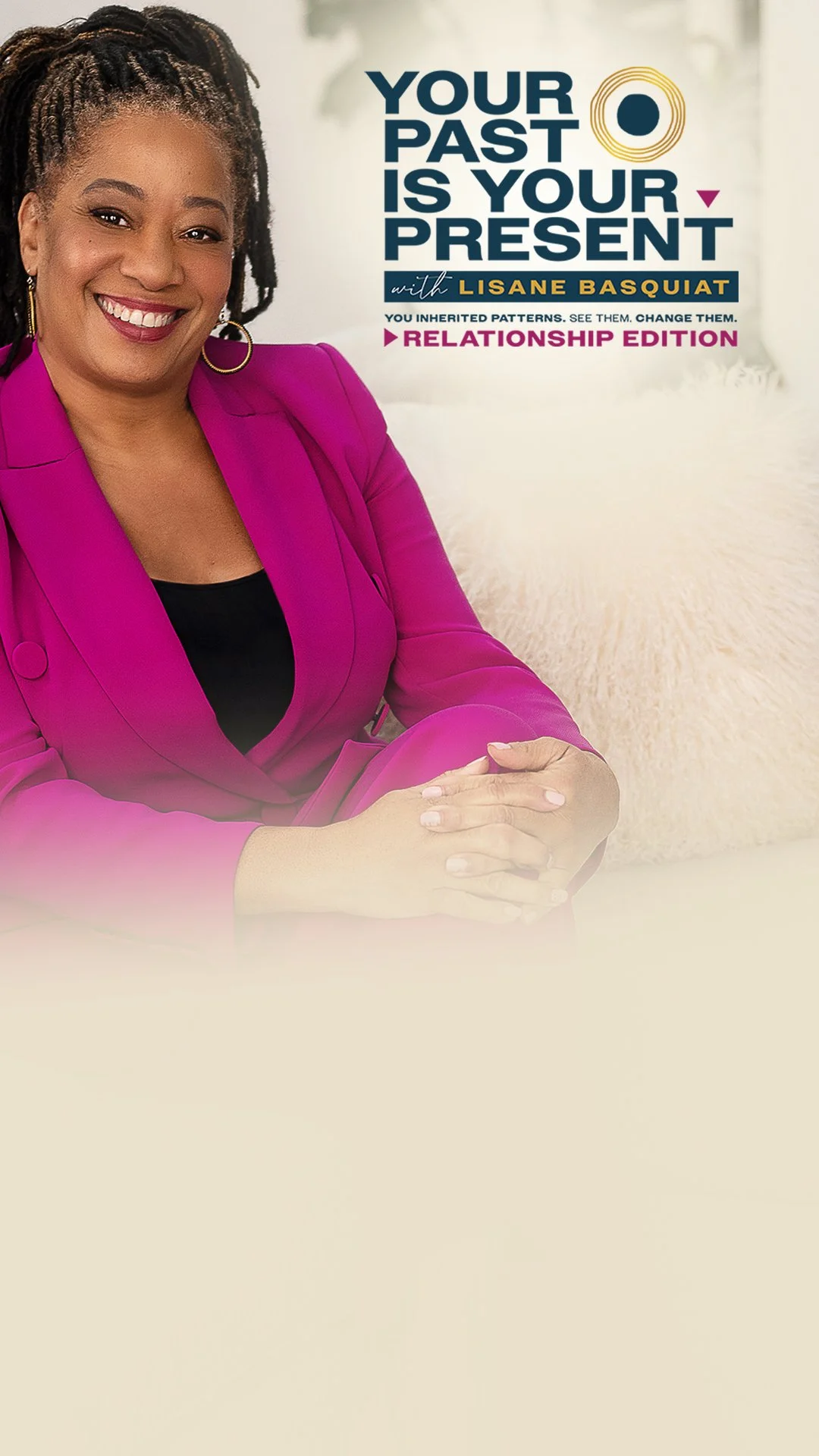
Your Relationship Isn’t the Problem.
The Patterns Underneath It Are.
In two hours, you'll finally see what's really been going on — and it's your first step toward clarity.
June 10 · 4:30 PM PT · Live on Zoom · 2 Hours
"This was an eye-opening session for me. Lisane was a wonderful facilitator who helped me see the motivations behind my patterns, without fault or blame."
–– Tamina M.
Lisane Basquiat is a Board-Certified Master Practitioner and Teacher of Neuro-Linguistic Programming and Certified Professional Coach with 20+ years of experience guiding people through the patterns shaping their closest relationships.
This will be the most clarifying two hours you’ve ever spent on your relationships.

Your Relationship Isn’t the Problem.
The Patterns Underneath It Are.
In two hours, you'll finally see what's really been going on — and it's your first step toward clarity.
June 10 · 4:30 PM PT · Live on Zoom · 30 Seats · 2 Hours
Lisane Basquiat is a Board-Certified Master Practitioner and Teacher of Neuro-Linguistic Programming and Certified Professional Coach with 20+ years of experience guiding people through the patterns shaping their closest relationships.
This will be the most clarifying two hours you’ve ever spent on your relationships.
"This was an eye-opening session for me. Lisane was a wonderful facilitator who helped me see the motivations behind my patterns, without fault or blame."
–– Tamina M.
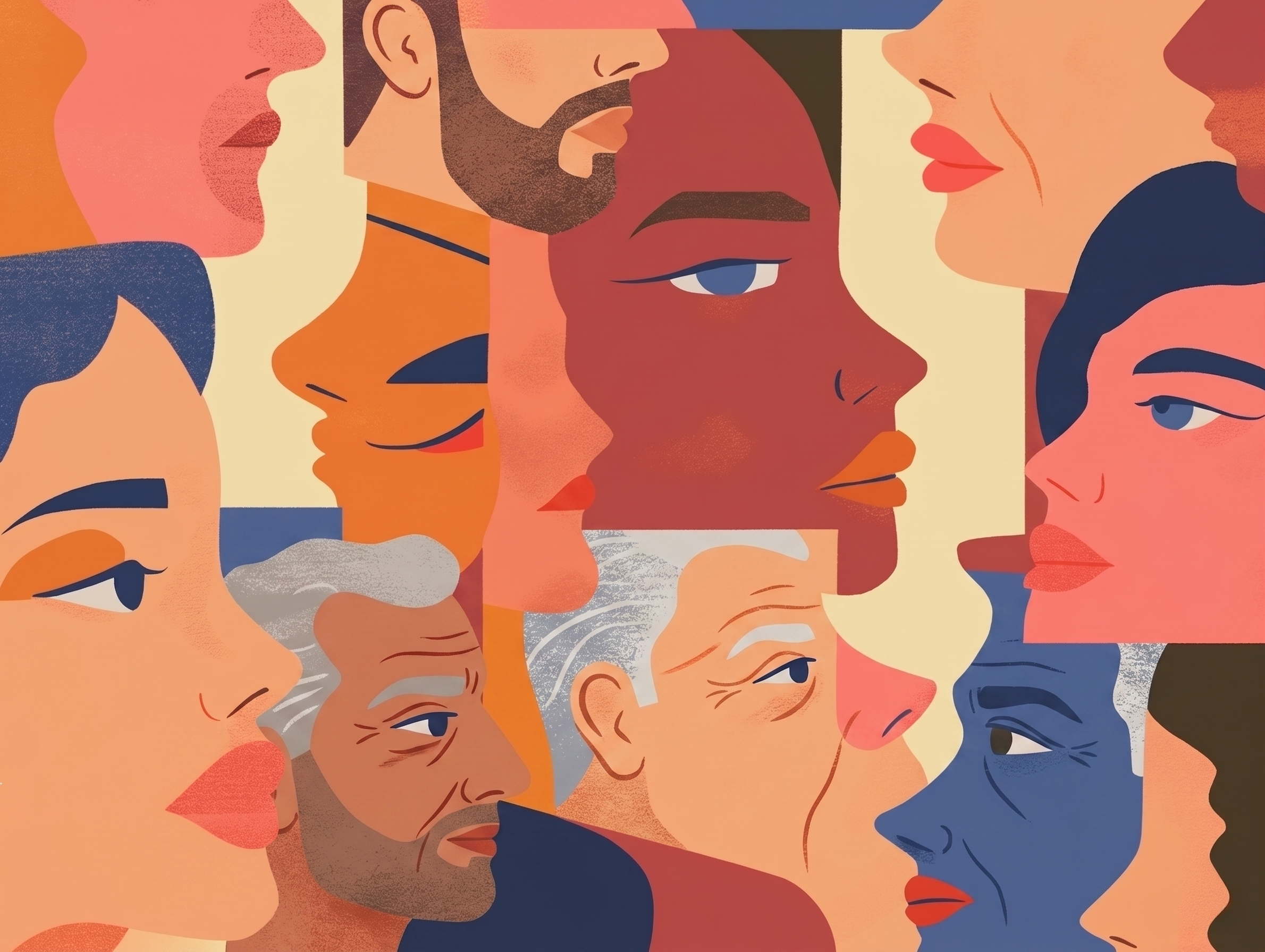
You've likely had this conversation before. Maybe with a partner, a parent, or a friend. Or perhaps with a colleague, a child, a spouse, or even a neighbor.
The details change. The intensity changes. The emotional outcome often doesn't.
You leave the interaction feeling misunderstood and emotionally exhausted.
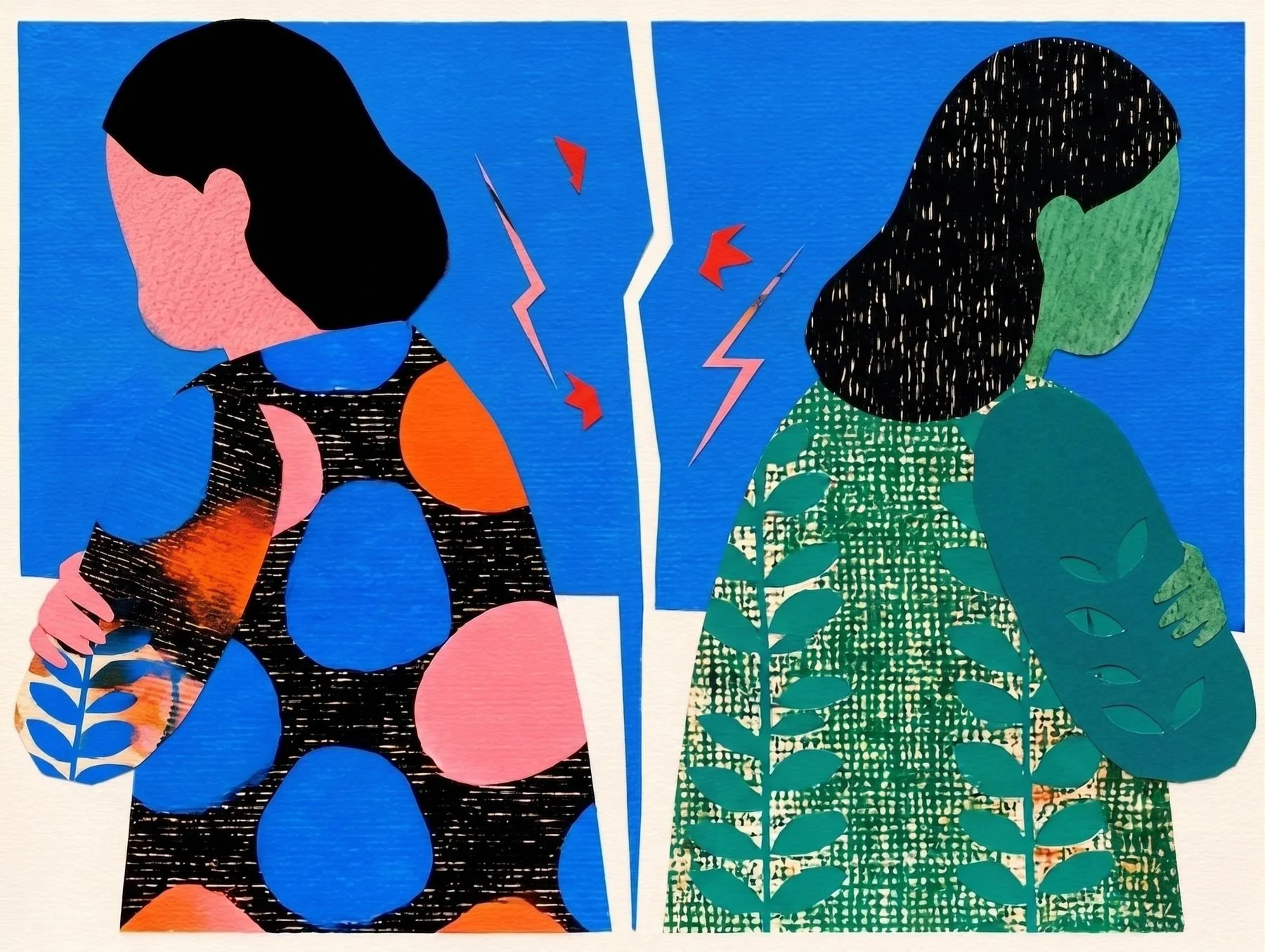
The same conversation on replay. Someone shuts down and the other pushes harder. One person becomes defensive and another over-explains. The almost predictable cycle with nothing getting fully resolved.
That's why I’m hosting Your Past Is Your Present: The Relationship Edition.
Join me online June 10 at 4:30 PT so that you can see the patterns before they become permanent.
The Issue Is Often about More than the Argument Itself.
The Patterns Are Older Than The Conflict.
And It's Been Running Longer Than You Realize.
Some of the strongest forces shaping present-day relationships were there before either person fully understood what they were bringing to the table.
So when conflict happens, people are not always reacting only to what is happening in the moment. They are also responding through unresolved emotional history, inherited meanings, familiar fears, and protective behaviors shaped years earlier.
Your baggage meets their baggage, and the pattern starts driving the relationship.
This is structured relational pattern awareness. Not therapy. Not blame. Not about taking sides. Just two hours of seeing what is actually happening underneath, in a warm, welcoming environment.
When you can finally see the undercurrent, you can understand what is truly shaping the relationship.
This is what we can achieve together on June 10.
48% report getting into the same fights with the people closest to them. The topics rotate. The dynamic doesn't. Most people call it a communication problem. What's actually running are patterns, sitting underneath every conversation that doesn't land. Nearly Half of Americans
Say They Keep Having
the Same Arguments.
Your Past Is Your Present: Relationships Edition is a transformational two-hour live workshop designed to help participants recognize the hidden relational patterns influencing their closest relationships before those patterns continue shaping communication, conflict, and important life decisions.
Source: YouGov / Lifeway Research, 2024
In this session, You’ll Explore:
Why the same conversations keep repeating
How unresolved patterns may be influencing present-day relationships
How emotional baggage and protective strategies can collide
Why certain moments feel disproportionately charged
The difference between present reality and past-based interpretation
One recurring relational pattern that may be shaping your outcomes
Greater clarity before making emotionally reactive or permanent decisions
“This workshop
really left an
indelible mark
on my heart.”
–Shanae S.
What Attendees Are Saying
-
"I have been navigating some family dynamic changes and this has been the best support."
Shanae S.
-
"This was an eye-opening session for me. Lisane was a wonderful facilitator who helped me see the motivations behind my patterns - without fault or blame."
Tamina M.
-
"Lisane has such a strong command of her work, you can feel the years of study, lived experience, and professional insight behind everything she shares."
Kara S.
What You’ll Leave With
A structured relationship pattern mapping framework
Greater awareness of recurring relational cycles
Insight into emotional triggers and protective behaviors
A clearer understanding of what may be yours, theirs, or inherited
Increased ability to recognize familiar dynamics earlier
Stronger clarity around how to move forward
FEATURED IN

About Lisane basquiat
I founded Shaping Freedom in 2017 around one central idea: the patterns driving conflict, distance, and disconnection in your relationships can be seen, named, and interrupted.
For more than 20 years, I've helped individuals, families, leaders, and organizations understand inherited patterns, relational dynamics, and the work of increasing awareness, reshaping internal strategies, and creating healthier outcomes across generations.
I'm a Board-Certified Master Practitioner and Teacher of Neuro-Linguistic Programming, a Certified Professional Coach, corporate trainer, and founder of Shaping Freedom®.

Who Should Attend?
This session is for Those who:
Feel stuck in repeated relational cycles
Keep having the same unresolved conversations
Feel emotionally exhausted, misunderstood, or reactive
Want clarity before making major relationship decisions
Are navigating challenges in romantic, family, friendship, or professional relationships
Are ready to understand their patterns before trying to change outcomes
-
This session is a transformational two-hour live workshop designed to help participants recognize the hidden relational patterns influencing their closest relationships before those patterns continue shaping communication, conflict, and important life decisions.
This is not therapy, blame, judgement or about taking sides. This is structured relational pattern awareness in a safe and welcoming environment. The goal is to introduce greater awareness of what is happening. Because when you can finally see the undercurrent, you can better understand what may truly be shaping the relationship.
-
One recurring relational pattern, mapped specifically for you. The emotional rule driving it, identified. A clearer understanding of what may be yours, theirs, or inherited from before either person arrived in the relationship. And the ability to make decisions about the relationship from clarity rather than reactivity. Two hours. Specific. Structural. Nothing about this session is theoretical.
-
The session runs for two hours on Zoom. Lisane teaches the framework, walks the group through the pattern-mapping process, and facilitates a structured personal reflection privately. There is no group discussion required, no role-play, no breakouts where you have to explain yourself to strangers. Cameras can stay on or off. Your reflection is yours. The structure is designed so the work lands without putting anyone on the spot.
-
Lisane Basquiat is a Board-Certified Master Practitioner and Teacher of Neuro-Linguistic Programming, a Certified Professional Coach, corporate trainer, and the founder of Shaping Freedom.
Lisane has 20+ years of experience guiding individuals, families, leaders, and organizations through inherited patterns, relational dynamics, and meaningful change.
Lisane has been featured in NPR, Essence, Rolling Stone, ABC News, CBS, Forbes, and the New York Times.
-
This session is awareness work, not clinical work. It does not diagnose, treat, or process trauma.
It is structured pattern mapping, designed to help you see one specific relational pattern and the emotional rule driving it. Many participants attend in addition to therapy.
Some attend on their own, looking for a framework to understand what is happening before they decide their next step.
-
No. You will not be put on the spot or asked to disclose anything you are not comfortable sharing. This is a facilitated group session.
You can engage as much or as little as you choose. Many participants find that the pattern descriptions are specific enough that they do not need to share their own story to recognize themselves in the work.
-
Yes, you can attend alone. The work is yours to do in your own reflection, and you do not need the other person to be there for the work to land.
When one person sees the patterns clearly, the way they enter the next conversation changes, and the relationship has different inputs.
-
You can still do this work alone, and it still changes the relationship. When one person sees the patterns clearly, the way they enter the next conversation changes. The reactivity drops. The interpretation softens. The relationship has different inputs.
You do not need their participation to see what is yours, what is theirs, and what was inherited by both of you.
-
Recurring arguments rarely come from the conversation in front of you. They come from older patterns running underneath the relationship. Unresolved emotional history, inherited meanings, familiar fears, and protective strategies that were in place long before this relationship began.
When two people interact, their patterns meet, and start driving the relationship. The same fight shows up in different words, with different people, in different settings, with strikingly similar outcomes. Seeing the patterns is the first step in changing them.
-
Because the patterns that shape who you choose, how you communicate, and what you tolerate were likely formed long before any of those relationships started.
Old wounds, emotional baggage, communication habits, protective responses, and survival strategies travel with you from one relationship to the next.
Until the patterns are named, they keep selecting the same kind of dynamic, even when the people involved are different.
-
Relationship patterns are a repeated way of interpreting, reacting to, and engaging with the people closest to you. They include how you respond to conflict, how you handle disappointment, how you express needs, and what you assume about the other person's intent.
Patterns are typically inherited (formed in childhood or family of origin), reinforced over time, and operate below conscious awareness. They show up across romantic, family, friendship, and professional relationships. Once you can see one, you can change how it runs.
-
Because patterns are inherited the same way language and belief systems are inherited. They get passed down through what was modeled, what was rewarded, what was punished, and what was never named. A grandparent's emotional rule becomes a parent's parenting style, which becomes the child's relationship default.
Without intentional pattern recognition, the same dynamic continues to show up in the next generation, often with different details but the same underlying structure. Naming the patterns is what interrupts their inheritance.
-
People pull away for reasons they often cannot fully name in the moment. The instinct to create distance during difficult moments is one of the most common protective patterns, and recent research found that 73% of Americans default to distancing themselves from a friend or loved one rather than communicating to resolve issues.
Underneath the distancing is usually an inherited rule about what conflict means, what closeness costs, and what happens when someone gets too close. Seeing that rule is what allows a different choice to be possible.
-
Shutting down is a protective response, not a personal rejection. When a difficult moment activates an old emotional rule (like closeness leads to harm or speaking up leads to punishment), the body and brain respond by going still or going inward, often before the person consciously chooses to.
The other person in the conversation usually experiences it as withdrawal or stonewalling, but for the person shutting down, the patterns protect them from something they learned long ago to fear. Understanding the patterns is what makes the shutdown shift over time.
-
It means that your default ways of relating, communicating, and responding to conflict were shaped by the family system you grew up in, before you had the awareness to choose them. You inherited communication habits, emotional rules, conflict styles, and unspoken expectations from the people who raised you, who inherited theirs from the people who raised them.
Inherited patterns are not character flaws. They are learned strategies that worked at the time they were formed, and that may no longer serve the relationships you are in now.
Frequently Asked Questions

The pattern
doesn't
stop
on its own.
Understanding it
is where Your Healing begins.
June 10 | 4:30PM PT | $109 | Live on Zoom | 30 Seats Only