

How My Mother’s Life Shaped My Parenting

I struggled this past Mother’s Day weekend, and it took me by complete surprise.
Uncovering Unconscious Memories
On Friday, during what I expected to be a mild conversation, a friend and I casually ventured into a discussion about how our childhoods shaped our adulthood and our approach to parenting. We talked about how children often mirror their caretakers and, specifically, how little girls form their initial beliefs about womanhood and motherhood from their mothers.
When asked about my own experience, I shared my 4-year-old memory of how I witnessed my mother. Looking back, my mother always seemed overly busy, running on fumes, and working tirelessly to hold everything together. One of my core memories of her was sitting on the floor in the hallway outside our laundry room, sorting what seemed like a mountain of clothes that needed to be washed. Even at that young age, I felt an aversion to the domestic activities she seemed bound to – cleaning up constantly, washing and folding laundry, chasing after us, ironing, cooking, setting the table. She was always on the go, and none of it looked remotely fun.
I shared this scene in a matter-of-fact way, not thinking too much of it. Then I noticed an uncomfortable stirring as I realized aspects of this story that I hadn’t connected before. Suddenly, it dawned on me that, at the time, my mother wasn’t much older than my 30-year-old daughter is now, and there was context, lots of it.
The Context of My Mother's Sacrifice
By her early thirties, my mother had gotten married to my father (who’d immigrated from Haiti just a few short years before), birthed a stillborn son, and then had three living children starting a year later. She and my father bought and lived in a house with tenants. They took on the traditional roles of the time – him going to night school whilst he built a career, and she took care of the house, children, and everything else that comes with that.
That lady was tired all the time, and I have no memory of her taking a nap or of her simply Being. In fact, I remember her waking me up one morning and mentioning that she hadn’t slept the night before. When I asked why, she replied something along the lines of having so much to do to take care of our home. That felt like everything I did not want to be doing, even then.
On Friday, it dawned on me that all of this was going on during the parallel demise of my parents’ marriage. I cringed at how hard it must have been for her to juggle the care and needs of their three children ages eight, four, and 18 months, a cocker spaniel named Pisky, a home, being a landlord, while in the emotional caretaking role as mother and wife. She gave of herself completely within the parameters of that white picket fence yet, in hindsight, I saw no evidence of her carving out any space for this version of herself as the wife and mother, Mrs. Basquiat, in sharp contrast to the glamorous and carefree Brooklyn born Afro-Latin, Matilde.

Flora Andrades and Matilde Basquiat
My Grandmother and Mother
Processing the Loss and Growth
The enormity of this realization was sobering and I grieved my inability to call Mami to share this aspect of her life that I hadn’t fully grasped before. I then felt a surge of sadness for myself. I realized that because of the circumstances that followed – my parents’ split, us living with our father, and her struggles with mental illness – I never had the opportunity to witness my mother journey from those early hectic days of parenting small children to how she may have evolved in that role over time as the family settled into routine. This also meant that my ability to witness that trajectory was abruptly stunted for me, leaving me with an imprint to contend with.
In that moment, I felt both proud of and sad for the little girl within me, Lisa, who formed and shaped motherhood on her own terms while in many ways feeling like a motherless daughter. I spent this Mother’s Day weekend contemplating both sides of this part of my story; smiling, crying, grieving, and celebrating.
So often, we step into adulthood carrying emotional scars that stem from well-meaning and loving adults who were unaware of how their unresolved struggles are threads woven into their family legacy.
P.S. My mother’s name was Matilde Basquiat. As a younger girl, I felt abandoned by her and simply wanted a life that felt more “normal.” Later, we talked… a lot. We healed our pain and created a new level of mutual love, friendship, like, and understanding and shared one of the deepest relationships I’ve ever experienced. I miss that Lady so much, and spent last weekend allowing the mother/daughter/woman in me to salute the mother/daughter/woman in Matilde Basquiat.
What was your experience of your mother growing up, and how has it informed your approach to parenting today? Share your thoughts with our community: Shaping Freedom Group
Upcoming Shaping Freedom Events:
Soulful Saturday returns to Hera Hub Carlsbad on June 1. Tickets on sale HERE
Virtual ‘Avoiding the Burnout Trap’ workshop on June 1. Tickets on sale HERE
Virtual ‘The Reset Workshop: Boundaries, Relationships, Accountability’ workshop on June 22. Register HERE
Pictured:
Jeanine Heriveaux, Flora Andrades, Matilde Basquiat, and Lisane Basquiat
Flora Andrades and Matilde Basquiat
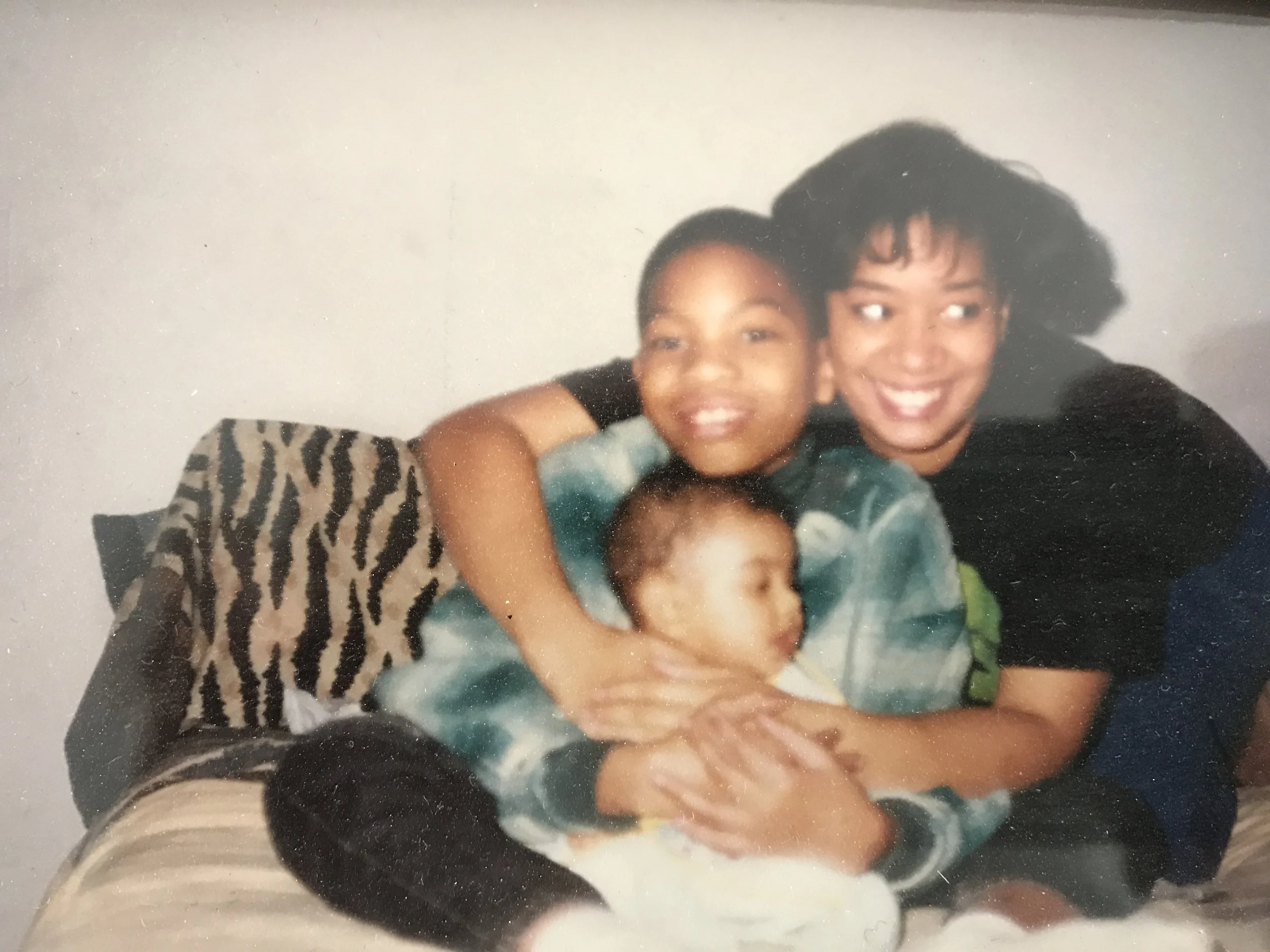
Jessica, Joseph, and Lisane Basquiat