

Stoic on the Outside, Suffering on the Inside | Why Men Fear Opening Up, and How That Can Change
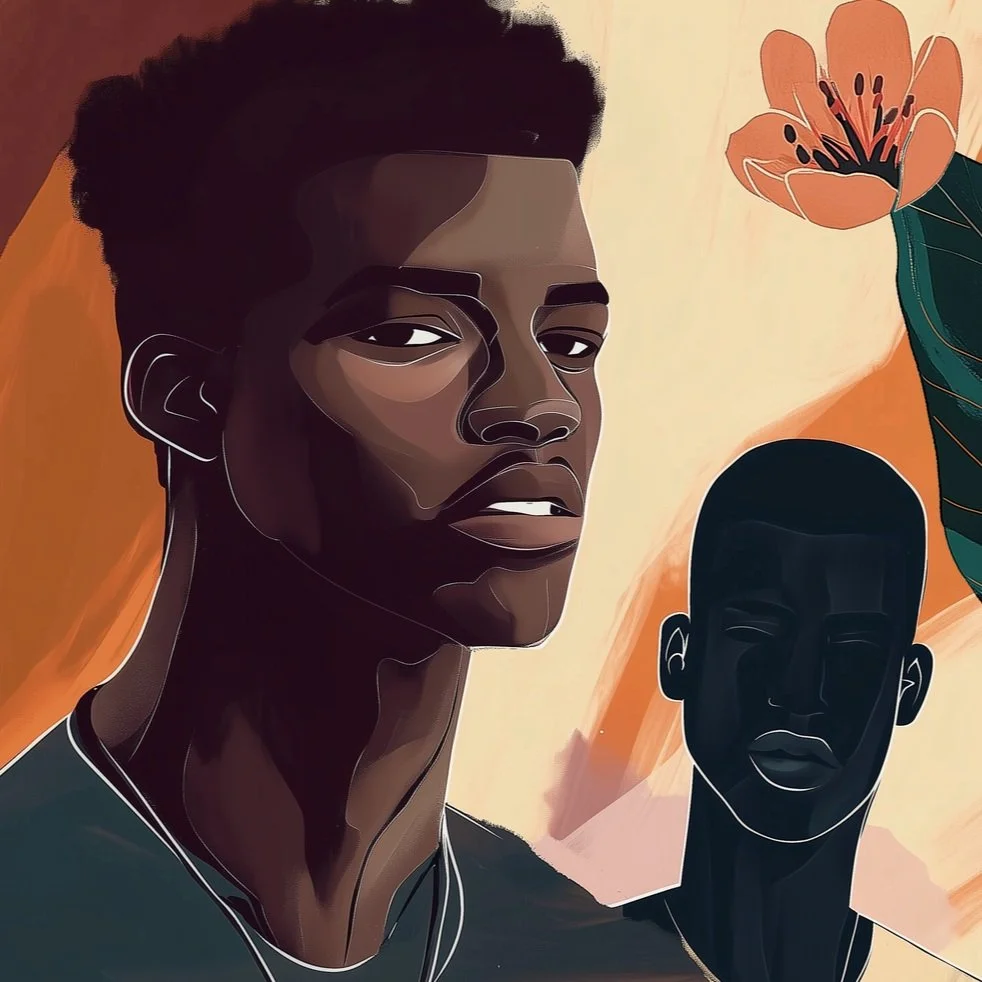
Many men are ensnared in outdated notions of masculinity. How can we evolve to create a life that honors emotional expression, especially when the values that many men were raised with don’t allow them to communicate or hold space for their own emotional truth?
This struggle is not merely anecdotal; studies reveal alarming statistics about men's mental health. According to the American Psychological Association, men are less likely than women to seek help for mental health issues, with only one in three men feeling comfortable discussing their feelings. Moreover, a staggering 75% of suicides in the United States are committed by men, underscoring the dire consequences of emotional suppression.
“I had to unlearn a lot of remarkably toxic macho tropes I was inculcated with as a child.”
Ghanaian visual artist Joseph Awuah-Darko is someone who is personally navigating this terrain, endeavoring to create space in his life for a spectrum of emotions to be felt and expressed–-not just the ones deemed culturally appropriate. In an episode of the Shaping Freedom podcast, he communicated with Lisane Basquiat about coming to terms with the values and traditions he grew up with in his home country: “I had to unlearn a lot of remarkably toxic macho tropes I was inculcated with as a child. In the Akan language, in Twi, they would say something along the lines of, ‘men don't cry, that's not really a thing that men do.’ There are these very one-dimensional ideas of what a man's role is.”
In many cultures, conversations around mental health remain stigmatized and fraught with misunderstanding. The deeply rooted beliefs that often accompany traditional values can render discussions about mental health taboo, particularly in communities where religion plays a significant role. This struggle is palpable in places like Ghana, where a commitment to faith often overshadows the need for open dialogue about emotional well-being.
“There are very one dimensional ideas of what a man's role is.”
Cultural narratives that equate vulnerability with weakness foster a sense of isolation. Men are often taught from a young age to embody stoicism and toughness, leading to maladaptive coping strategies. Research indicates that men typically express intimacy through aggression or hypersexuality rather than emotional connection, reinforcing the cycle of emotional detachment. A study published in the journal Psychology of Men & Masculinity found that adherence to traditional masculine norms significantly correlates with depressive symptoms and anxiety among men, revealing the hidden toll of these societal pressures.
Breaking free from this paradigm demands a courageous re-examination of deeply ingrained beliefs about masculinity. This journey toward self-discovery is often facilitated by unlearning harmful stereotypes and adopting a fuller emotional spectrum. Joseph is someone who embraces this process himself, stating that, “As I grew older, there was a great unlearning that took place in being able to be kind to myself. You know, as much as I pride myself in my grit and my tenacity and my strength, I am also allowed to be soft.” By recognizing that vulnerability can coexist with strength, men can cultivate deeper, more authentic relationships with themselves and others.
“As I grew older, there was a great unlearning that took place in being able to be kind to myself. You know, as much as I pride myself in my grit and my tenacity and my strength, I was also allowed to be soft.”
Creating supportive environments is also crucial for fostering emotional openness. Engaging in therapy, support groups, or community discussions can provide men with safe spaces to explore their feelings. A survey by the National Institute of Mental Health found that men who participate in peer support programs report a 50% increase in feelings of social connectedness and a notable decrease in depressive symptoms.
Ultimately, the journey to mental wellness for men transcends individual experiences. By challenging and reshaping societal norms around masculinity, men can contribute to a cultural shift that values emotional expression and vulnerability as vital components of a fulfilling life. The act of unlearning emotional suppression is not just a personal triumph, it is a collective endeavor that can pave the way for future generations to experience the richness of human connection.
TL;DR (Too Long Didn’t Read)
Seeking help: Only one in three men feels comfortable discussing their emotions, highlighting a significant barrier to mental health support.
Mental health crisis: Men account for 75% of suicides in the U.S., indicating the severe consequences of emotional repression.
Unlearning harmful norms: Traditional masculinity is linked to increased depressive symptoms and anxiety, as per studies.
The power of community: Men in peer support programs experience a 50% increase in social connectedness, showcasing the benefits of shared emotional expression.
ADDITIONAL RESOURCES
Joseph Awuah-Darko Learn more about Joseph’s journey
BBC News Read about Joseph’s “spreadsheet of emotion”
Listen to Joseph and Lisane on the Shaping Freedom podcast.