

The Hidden Strength of Vulnerability | How Creative Expression Redefines Resilience
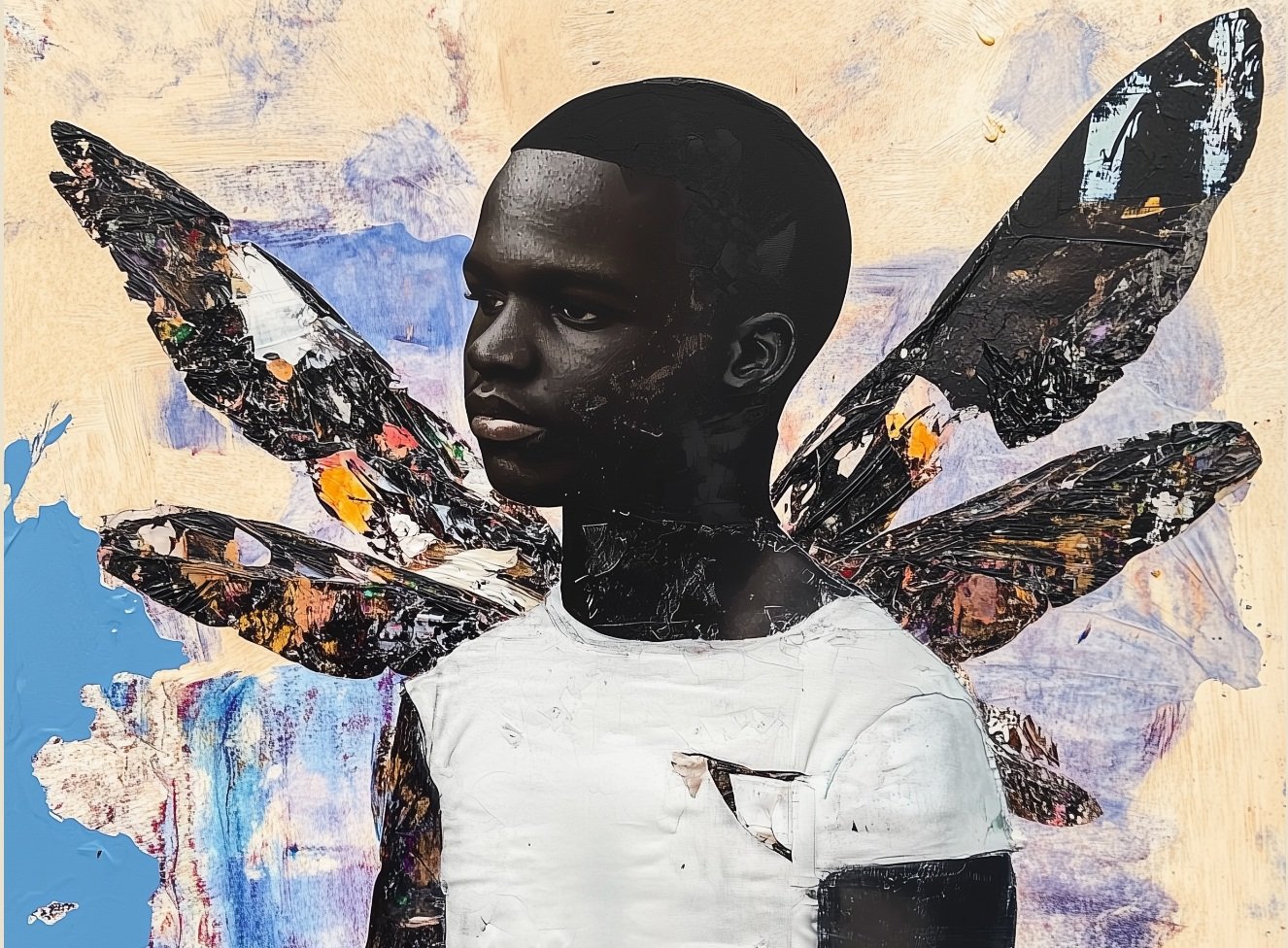
In many families, the journey toward emotional openness is an intricate dance between cultural pride, generational resilience, and the quiet, pervasive shadows of unspoken pain. Cultural conditioning among many older generations often conflates vulnerability with weakness, nudging individuals to repress their emotions, erase the truth of their experiences, and adopt a facade of impenetrable strength.
This isn't due to a lack of care or an absence of feeling—it's a way of surviving, a deeply ingrained belief that fortitude is measured by one’s ability to hold steady, even in turbulent emotional waters. Yet, this expectation of unwavering resilience has forged a double-edged sword, creating barriers to openly discuss mental health issues, and leaving much of the pain of generational trauma unaddressed.
Born and raised in Jamaica before immigrating to the United States, artist Ainsley Burrows understands all too well the impact of suppressing discussions around mental health, as he explained to Lisane Basquiat on the Shaping Freedom podcast. “With mental illness, families sweep it under the rug and don’t talk about it for so long that it becomes almost like nonexistence. But as a kid growing up, it impacted me so much that it became a reason why I make art.”
For some, creative expression becomes the only safe space to give voice to these buried feelings. Art, in its many forms—music, painting, writing—becomes not just a hobby, but an essential means of survival and self-discovery. It allows individuals to explore what’s left unsaid, turning silence into stories and pain into paintings.
“Cultural conditioning among many older generations often conflates vulnerability with weakness, nudging individuals to repress their emotions, erase the truth of their experiences, and adopt a facade of impenetrable strength.”
Like many adult children of immigrant and Caribbean families, Ainsley also finds himself caught in a paradox: the profound presence of love may be felt, yet many people in these circumstances find themselves lacking the language to openly express themselves and the truth of their experience to family members.
Showing vulnerability, revealing emotional depths, or even sharing a struggle can feel as though it defies an unspoken rule. “Caribbean people, and immigrants in general, lack a lot of the ‘safe spaces’ that exist inside of the U.S.,“ says Ainsley. In this cultural tapestry, affection often hides beneath layers of tough love or silent acts of service, gestures that say "I care" without uttering the words.
Conversations may also deliberately skirt around difficult topics, brushing past trauma and avoiding pain in the name of protecting oneself and others from what might be too hard to bear. “When people have physical ailments or issues with their physical health, they're cared for by the family—there’s an understanding that this person has this thing, so let's slow down a little bit so the person can catch up or let's take a moment to speak with the person about it. But with mental and emotional issues, they don't get that same grace,” notes Ainsley.
In many communities, mental health issues like depression and anxiety are often perceived through a lens of shame, with an undertone that to struggle mentally is somehow dishonorable. The common refrain is to “just get over it” or “be strong,” leaving little room for acknowledging suffering or seeking help.
“…mental health issues like depression and anxiety are perceived through a lens of shame, with an undertone that to struggle mentally is somehow dishonorable.”
The weight of unspoken generational trauma adds another layer, as each generation carries the legacy of those before them—struggles with displacement, sacrifice, and survival woven into their very being. This silence surrounding pain and vulnerability becomes a form of self-preservation, yet it also stifles emotional connection. Here, again, art plays a quiet but powerful role. Creating and sharing personal stories, songs, or visual expressions becomes a gentle way to push back against cultural norms that may silence inner worlds.
Through these creative pursuits, individuals can find a path to reclaim their narratives and rewrite what has been inherited, offering themselves a way to heal, soften, and understand in ways words alone might never fully capture. In this process, there’s the possibility of transformation—not just for the individual but for the entire family. Each poem, painting, or song shared within a family can serve as an invitation to begin conversations that may have once felt impossible.
As younger generations navigate these complex cultural landscapes, they’re not only finding ways to heal themselves, but are also tenderly shifting these deeply ingrained narratives toward a space that makes room for both strength and vulnerability. Through the language of art and storytelling, there’s hope that love and resilience can finally sit beside emotional openness, offering a bridge between generations.
TL;DR (Too Long Didn’t Read)
Cultural beliefs around strength and resilience can hinder vulnerability and emotional openness.
Many immigrant families, particularly from Caribbean backgrounds, struggle to openly express emotions, often out of a sense of "keeping it together" or prioritizing survival.
Conversations around mental health and generational trauma are challenging, often met with denial or deflection, yet they profoundly impact emotional well-being.
Artistic expression can serve as a safe space for individuals who face stigma or cultural barriers to processing family history and mental health concerns.
ADDITIONAL RESOURCES
Ainsley Burrows Art – Check out the work of Ainsley Burrows
Ainsley Burrows – Follow Ainsley’s journey
Listen to Ainsley and Lisane on the Shaping Freedom podcast.