

Why Adult Children Stop Talking to Their Parents | The pattern was running for years before the silence started
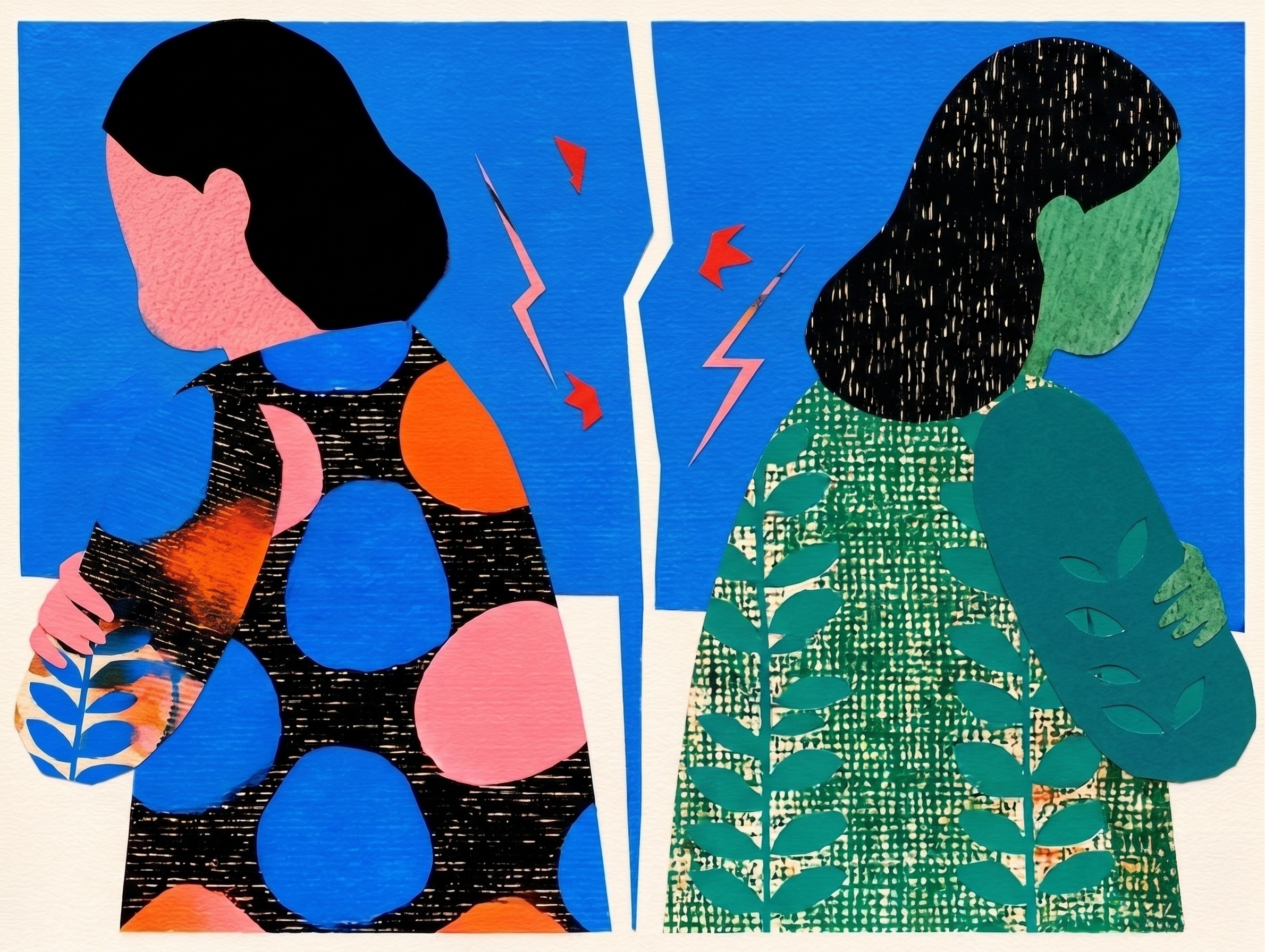
I've watched this scene play out too many times to count. An adult child sits across from a parent and says something honest. Something they've been carrying for years. Maybe it's about how they felt growing up. Maybe it's about the distance that's been building between them. The parent responds by listing everything they sacrificed. The adult child goes silent. Nothing gets resolved.
The same dynamic shows up the next time. And the time after that. Until one side stops trying.
What's actually happening is that each are speaking through a pattern that neither is clear about.
Family estrangement almost always has roots that reach further back than anyone realizes. The distance between a parent and adult child today often carries something learned early on that is running the show today.
1. A Family Is a System With Rules No One Wrote Down
Every family operates as a system.
Not a formal one. A system where we learn how to relate by adapting to our environment. These are the rules that got encoded through behavior, not conversation. How anger was allowed to be expressed or the emotions we got punished for. What was safe to express and what wasn’t. Who was permitted to need things. What was rewarded or rejected.
You weren’t formally taught these rules. rules. You learned strategies as a way to stay connected, stay safe, or be accepted.
Research on intergenerational parenting confirms what family therapists have observed for decades: most parents model their parenting after their own parents, often without realizing it. From early childhood, we absorb how conflict gets handled, what gets rewarded, and what has to stay hidden. (Psychology Today, 2021)
These become the operating system of the family. The next generation inherits the same system and bestows it on auto-pilot, until someone sees it and decides that enough is enough.
2. The Parent Is Running the Strategy They Were Handed
When an adult child raises something difficult and the parent responds by listing their own sacrifices, most people read it as defensiveness or selfishness. Those labels miss what's actually running the exchange.
Somewhere in that parent's history, there was a rule about what happened when someone expressed a need. Maybe it wasn't safe to acknowledge the hurt of another person without feeling your own worth disappear. Maybe the only way to hold on to dignity was to defend. Maybe no one ever asked them how they felt, so they don't know how to sit inside that question now.
Their strategy was built to survive their own family system; and they became parents of their own.
Research on the intergenerational transmission of parenting practices found that early exposure to harsh parenting is the most consistent predictor of which parenting strategies someone will adopt with their own children. (Neppl et al., PMC, 2009) Most parents step into parenthood on autopilot and reaching into the same toolkit used for them - even when they disagreed with it.
The sum total of the strategies inherited by both parents. Sometimes it was learning to go silent and to wear a mask versus speaking your truth. Or, stifling your needs and dreams.
Two people sitting within their respective inherited systems in a frustrating present day moment.
Neither one chose any of this.
3. The Cost of the Unseen Pattern
Time and progress. Families spend years at obligatory functions and holiday dinners that fit the image but land flat for those at the table. Children have children and that elephants in the room remain, unexamined or resolved. The opportunity to move the conversations beyond past discrepancies shrinks beneath the surface need to be right. The family system stalls and the unit remains stagnant.
Time. The years of holidays where everyone performed. The conversations that could have happened and didn't. The questions that were never asked because nobody believed the answer would land.
Energy. Family members feel depleted at the thought of being around each other. The internal monitoring required to stay in relationships where the real conversations never happen. The rehearsals before phone calls. The recovery after visits.
And the thing that is saddest of all; the version of each person that never got to exist in front of the other.
Murray Bowen, who founded Family Systems Theory, made the point this way: we inherit more than physical traits from our ancestors. Our emotional responses, coping mechanisms, and relationship patterns carry forward through previous generations, through direct interactions and through the subtle, unspoken transmission of beliefs and behaviors. (First Things First)
Unseen patterns compound. Each year they run, the distance grows. Each unresolved exchange reinforces the strategy on both sides. The adult child gets more certain the parent can't hear them. The parent gets more certain nothing they do is enough. Both sides accumulate evidence for a conclusion neither one wants.
Seeing the origin of the pattern shifts what becomes possible. The question stops being "who is wrong" and starts being "what are we both responding to, and where did it actually begin." That question has room to move in it. The old one never did.
I'm running a live, two-hour Zoom session for parents and adult children who want to see what's actually driving the distance between them. Save your spot for our next session, before the pattern shapes the outcome permanently.
TL;DR
Most family estrangement begins with patterns that were running before either person involved was born. Parents tend to parent the way they were parented. Adult children learn their own strategies for handling conflict inside the same system. Both sides respond from inherited emotional rules that feel personal. The cost of the unseen pattern is time, energy, and the version of each person that never got to exist in front of the other. Seeing where the pattern originated shifts what becomes possible.
Frequently Asked Questions
What actually causes family estrangement? Family estrangement rarely comes from a single incident. It builds through repeated interactions in which both sides run inherited strategies that never fully meet each other. Over time, the accumulated weight of unresolved exchanges creates distance that feels impossible to close. The cause is the pattern running underneath every argument, year after year.
Why do adult children estrange from their parents? Adult children who pull away from parents are usually responding to a pattern that has been running across many years and many conversations. At some point, the cost of staying in the relationship in its current form becomes higher than the cost of the distance. Most don't set out to estrange. They stop trying to close a gap that keeps opening in the same place.
Are generational family patterns real? Yes. Research across family systems theory, developmental psychology, and intergenerational parenting studies consistently shows that emotional responses, conflict strategies, and relationship behaviors transmit across generations. Most of this transmission happens without words, through what children observe and absorb inside their family system.
Why do my parents react the same way every time I try to talk to them? Because they are running a strategy they learned inside their own family system, long before you were born. When you raise something difficult, it activates a pattern their nervous system encoded as survival. The response you're meeting carries everything that response was originally built to protect.
Can a parent change a pattern they inherited? A parent can interrupt an inherited pattern, but the first step is seeing it clearly. Behavior change without pattern recognition tends to revert under stress. What changes the trajectory is naming what was inherited, where it came from, and what purpose it was originally serving.
Does understanding where a pattern came from repair the relationship? Understanding the origin of a family pattern doesn't automatically repair the relationship. It changes what's available. When both sides can see what they've been responding to, the conversation stops being about proving who was right and starts being about what each person actually inherited. That shift creates room for something different.
–––––––
About Lisane Basquiat
Lisane Basquiat is the founder of Shaping Freedom and creator of the Your Past Is Your Present awareness session. A Board-Certified Master Practitioner of Neuro-Linguistic Programming and Certified Professional Coach with 20+ years guiding transformation, she helps people see the patterns shaping their responses so they can make more intentional choices. Her work is informed by cultural anthropology, neuroscience, and decades of experience working within family systems and leadership environments.